Education
AI in the classroom and the office: What does it mean for schools and education?

Twice in the same week
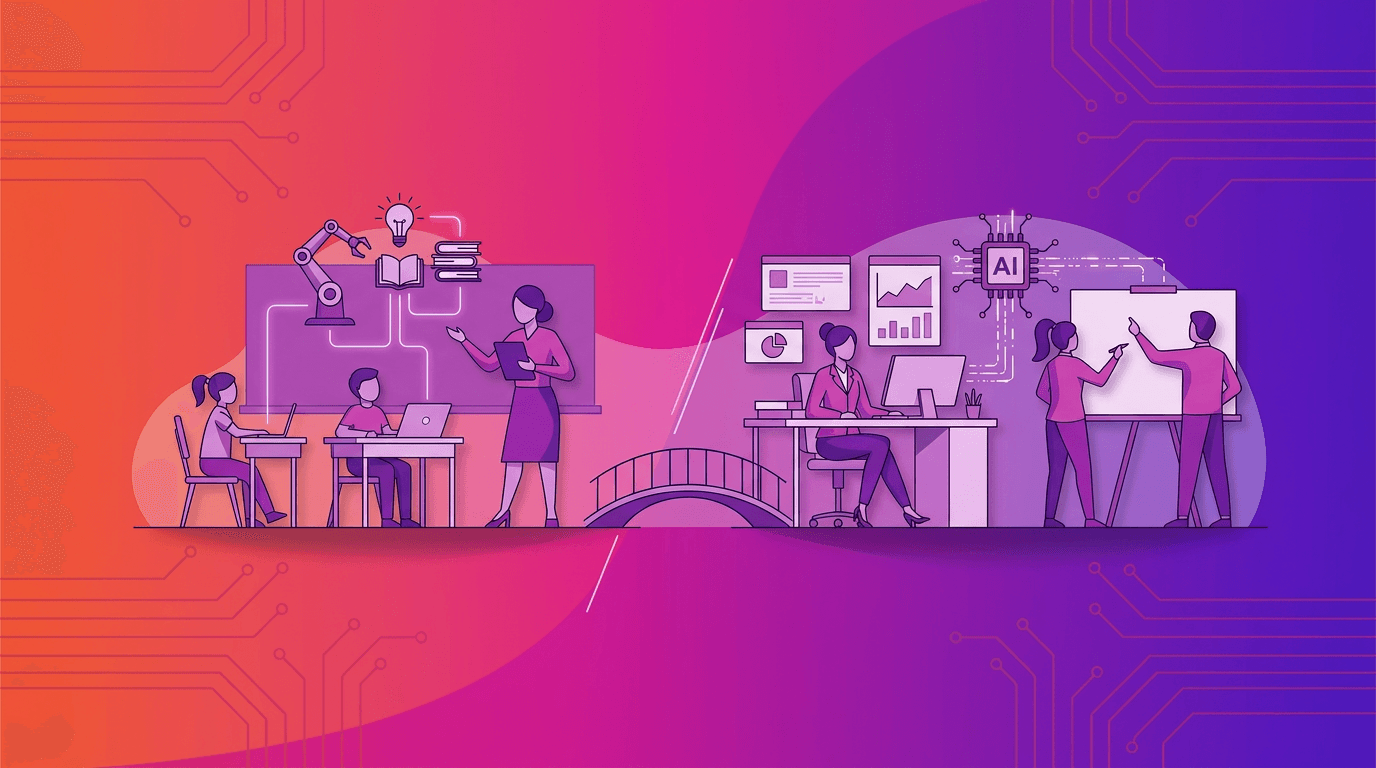
Thor-André had two meetings the same week that put things in perspective. On Monday he sat with a school principal worried that students were using AI to write essays for them. On Thursday he sat with an HR director worried that employees weren't using AI enough, while competitors clearly were.
Same technology. Opposite worries. That says something about how unclear the landscape still is, both in the classroom and in the office.
In the classroom: from cheating panic to a tool
Many schools' first reaction to AI was to ban it. That's an understandable instinct, but one that rarely works in practice and doesn't prepare students for a working world where these tools are already part of everyday life.
The schools Thor-André sees succeed have shifted the question from «how do we prevent use» to «how do we teach critical use». That means showing students where AI gets things wrong, where it invents facts, and how to evaluate an answer instead of copying it blindly.
In the office: from fear of falling behind to real value
At work the worry is often the opposite: a fear of missing out, which leads leadership to buy tools nobody actually asked for or knows how to use well. The result is licenses collecting dust, not productivity.
What actually works looks a lot like what works in the classroom: concrete training on real tasks, not a general demo, and time set aside to actually try it out before expecting results.
What ties the two together
Whether it's a 16-year-old or an experienced consultant, the challenge is the same: AI is useful when you understand what it's good and bad at, and dangerous when treated like an oracle. Schools and businesses that succeed are the ones that take time to learn that difference, instead of jumping straight to either a ban or blind trust.
So which of the two conversations do you recognize yourself in most, Monday's or Thursday's? Feel free to reach out to Thor-André to discuss where your organization stands.
Transparency note: This article is based on the author's own analysis and experience. AI has been used as an editorial aid for language and structure.