Hans Audun works with e-commerce at Frontkom and helps organisations sell more and better online. He has seen the same misunderstandings come up repeatedly when B2B companies attempt e-commerce.
B2B commerce online is growing rapidly. But many B2B companies that list e-commerce as a channel make a fundamental mistake: they build a B2C webshop and put B2B products in it. That rarely works.
What distinguishes B2B from B2C in practice
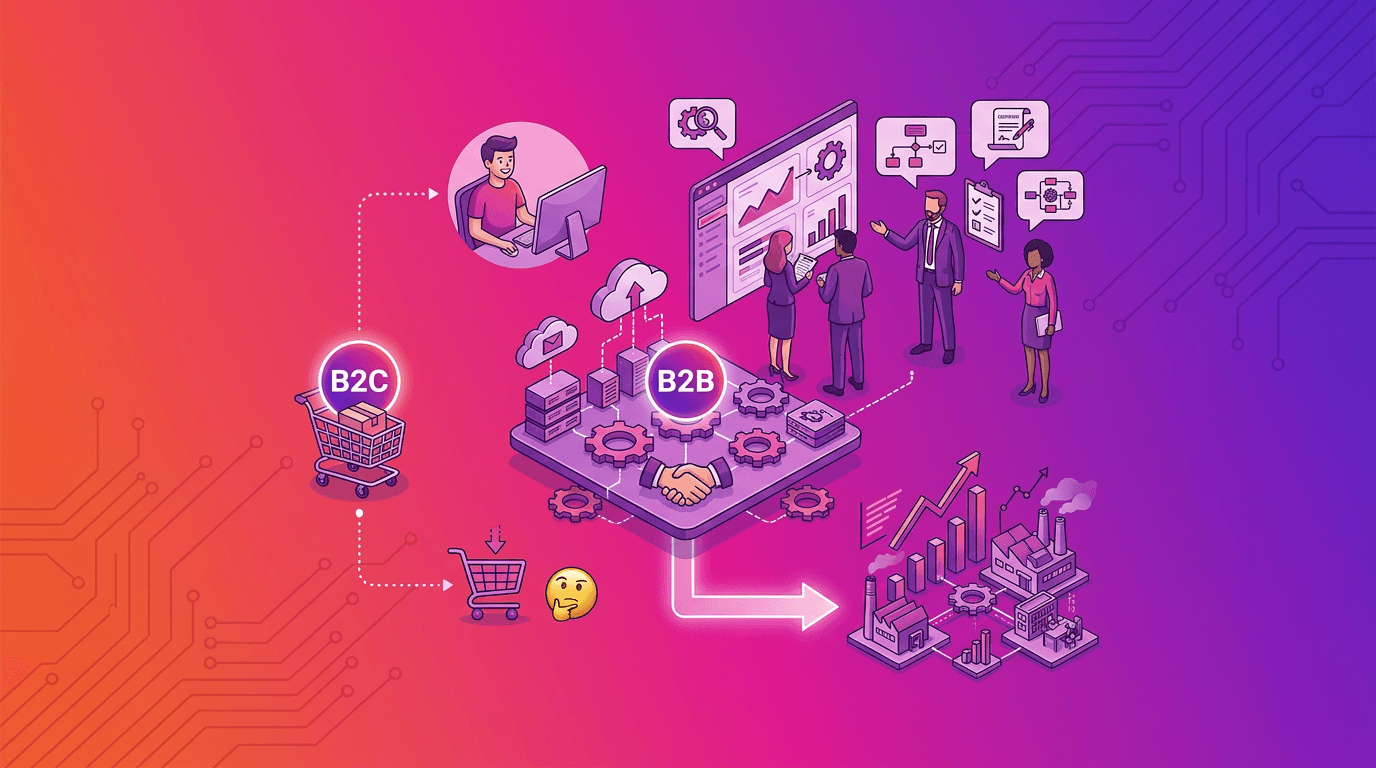
In B2C, one person buys for themselves, pays by card and does it in a single session. In B2B, one person buys on behalf of an organisation, using a credit account, after approval from a manager, perhaps following a pre-negotiated contract with specific pricing.
The three critical functions in B2B e-commerce
Customer-specific pricing. Different customers often have different agreed prices. The system must recognise the logged-in customer and show the correct price, not the list price. For many B2B companies, this is the highest technical barrier, but also the most important one.
Purchase orders and invoicing. Most B2B purchases go through invoice processing, not card payment. A solution that does not support this does not reach the procurement managers who actually make the volume purchases.
Reorder and subscription. In B2B, customers often buy the same things again and again. Systems that make reordering simple, with one click or automatically on a cycle, increase volume per customer considerably.
A B2B webshop that does not understand B2B is not a new channel. It is a new friction point.
Frontkom helps B2B organisations evaluate, design and implement e-commerce solutions that fit the actual buying process of B2B customers. Get in touch with Hans Audun for a no-obligation conversation about what is right for your organisation.