

A customer service agent opens a case. The customer has called about the same issue for the third time. But the system shows nothing from the two previous calls, because they live in a different database, in a different department, in a different system. Halvor has seen this scenario repeat itself at so many companies that he's stopped being surprised.
It's not because people don't care. It's because their customer data lives in too many houses, and nobody has built a door between them. A CRM system doesn't fix this automatically. It only fixes it if it's used the way it's meant to be: as the one place where all customer data actually lives.
Three signs your customer data is scattered
1. Support can't see what sales promised the customer. 2. Marketing sends campaigns to customers who just filed a complaint. 3. Nobody can answer how much a customer is actually worth to the business, because the answer requires opening four different tools and adding it up by hand.
If any of this sounds familiar, it isn't really a technology problem to begin with. It's an organizational problem that technology has amplified. But it's also a problem technology can solve, if done right.
What a CRM actually does, in practice
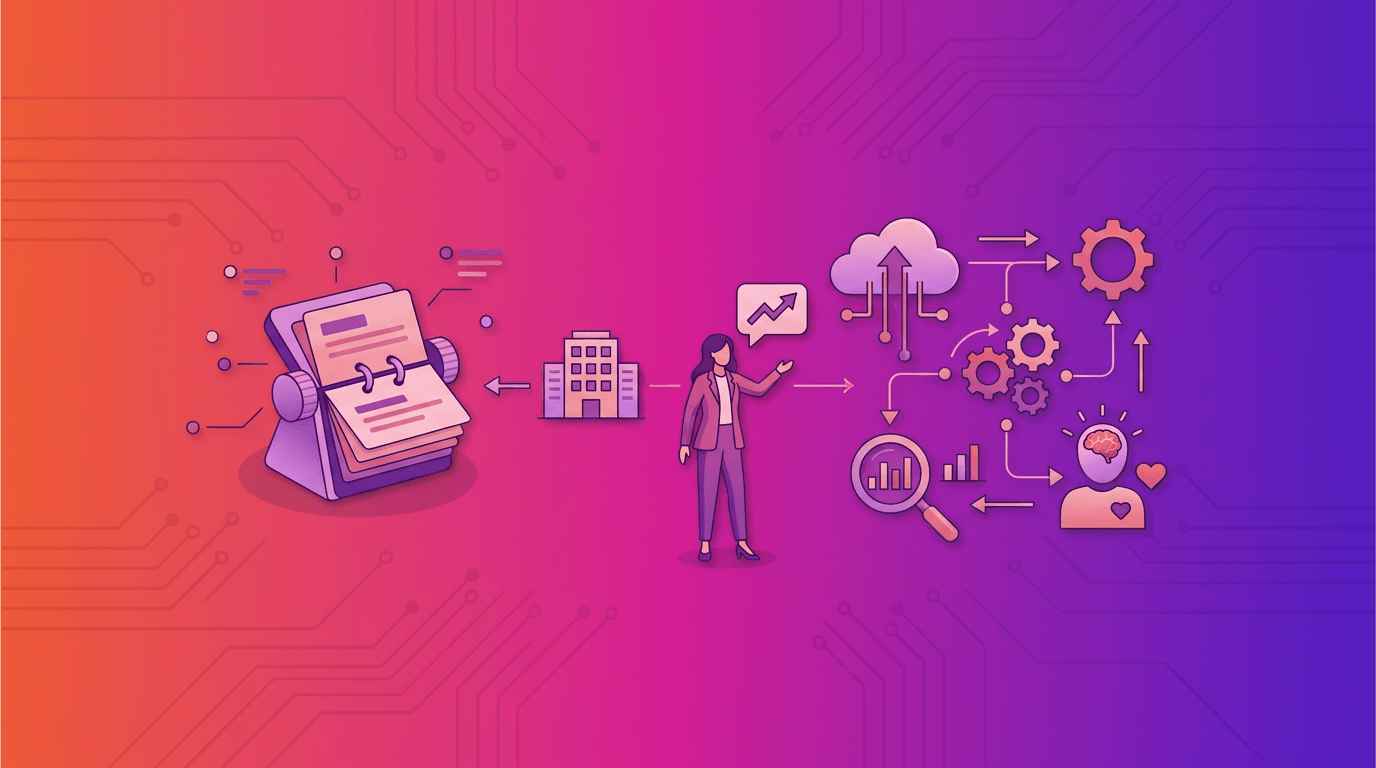
A CRM system isn't a digital rolodex. It's the combined history of every customer relationship: every call, every purchase, every complaint, every promise made. Used correctly, a support agent can see the entire customer journey in ten seconds instead of asking the customer to repeat themselves.
Halvor points to three things that separate companies that succeed with CRM from those that just buy licenses and let it sit untouched in a corner.
Data has to go in one place, not several. If sales, support, and marketing each keep their own source of truth, you still don't have one CRM. You have three half-good systems pretending to be one.
It has to be easy to use, or it won't be used. A CRM that takes five minutes to log a call in gets abandoned within a month. The tool has to fit into the workday, not demand an extra one.
Someone has to own data quality. A CRM full of duplicates, outdated contacts, and half-finished notes is worse than nothing, because it gives false confidence.
A CRM isn't a tool you buy. It's a habit you build, with a tool that supports it.
Where most companies start wrong
The most common mistake is starting with the tool: picking a platform, setting it up, and then expecting the organization to change to fit the system. That rarely works. The right direction is the opposite: map how customer data actually flows today, find where it stalls or disappears, and only then pick a system that solves those specific bottlenecks.
It takes a bit more work up front. But it's the difference between a CRM that's still in use two years from now, and one that becomes an expensive digital graveyard for old contacts.
Get in touch with Halvor if you want to know where your customer data is actually leaking between systems today.
Transparency note: This article is based on the author's own analysis and experience. AI has been used as an editorial aid for language and structure.