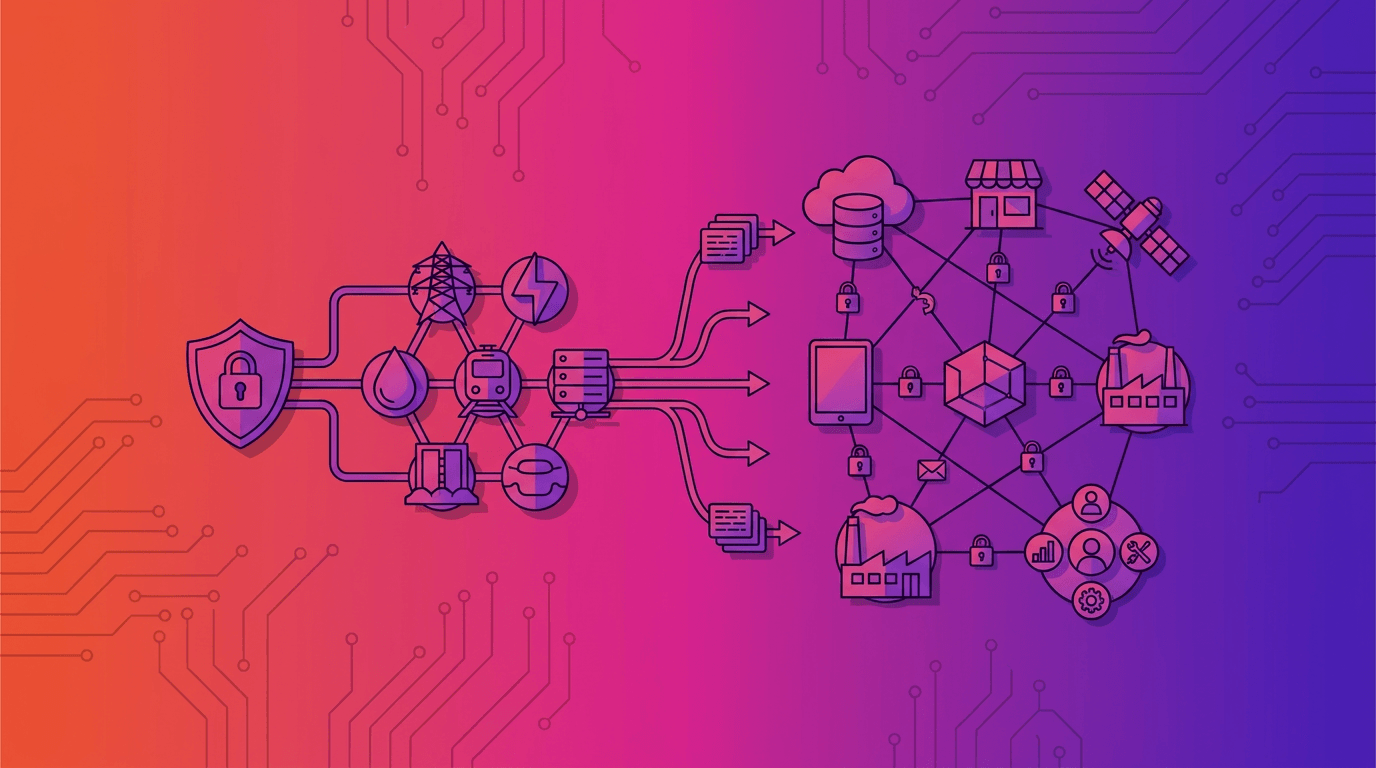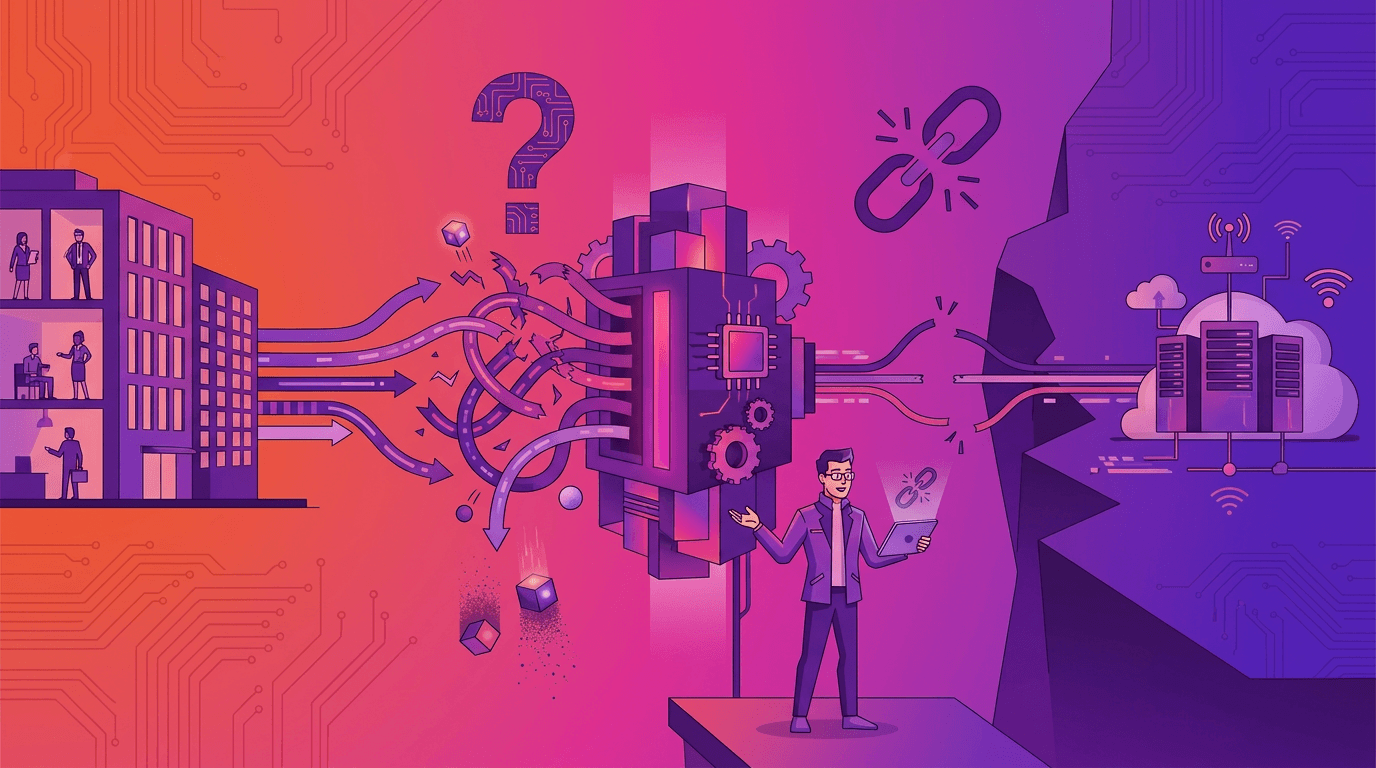
Erlend often gathers clients around a whiteboard and asks them to draw every system they use during a workday. Then he asks them to draw lines between the systems that actually talk to each other automatically. The result is almost always a picture of many boxes and very few lines.
Four places integration gaps usually show up
Between website and CRM, where leads have to be typed in manually because the form isn't connected to anything. Between the finance system and inventory, where stock levels and invoicing data live separate lives. Between support and product development, where customer feedback never finds its way to the people building the product. And between HR and everything else, where a new hire has to be created manually in six to ten different tools.
What it actually costs to leave it alone
The cost is rarely visible on a balance sheet, so it rarely gets prioritized. But it's there: hours spent on manual double entry, errors that appear when someone copies numbers from one system to another, and decisions made on outdated information because nobody wanted to check three systems first.
Erlend often works this out together with clients, and the number that comes out is almost always higher than they expected, often several full-time-equivalent years spread across a handful of departments.
Why it doesn't require replacing everything
The good news is that the fix is rarely to throw out existing systems. Most modern systems have open interfaces (APIs) that let them talk to each other, if someone builds and maintains the connection. An integration platform or a few purpose-built connections can close the biggest gaps without touching the systems themselves.
How to get started
1. Draw the map, just like on the whiteboard: every system, every line, or lack thereof. 2. Rank the gaps by how much time or risk they actually cost. 3. Close the biggest gap first, and measure the effect before moving to the next.
It isn't one big, scary IT project. It's a series of small, measurable improvements, and each one hands time back to people who would otherwise have spent it moving data manually between boxes on a whiteboard.
Get in touch with Erlend to map out your own systems and find out where the biggest gaps actually are.
Transparency note: This article is based on the author's own analysis and experience. AI has been used as an editorial aid for language and structure.