Websites
Two out of three Google searches end without a click. What is your website for now?

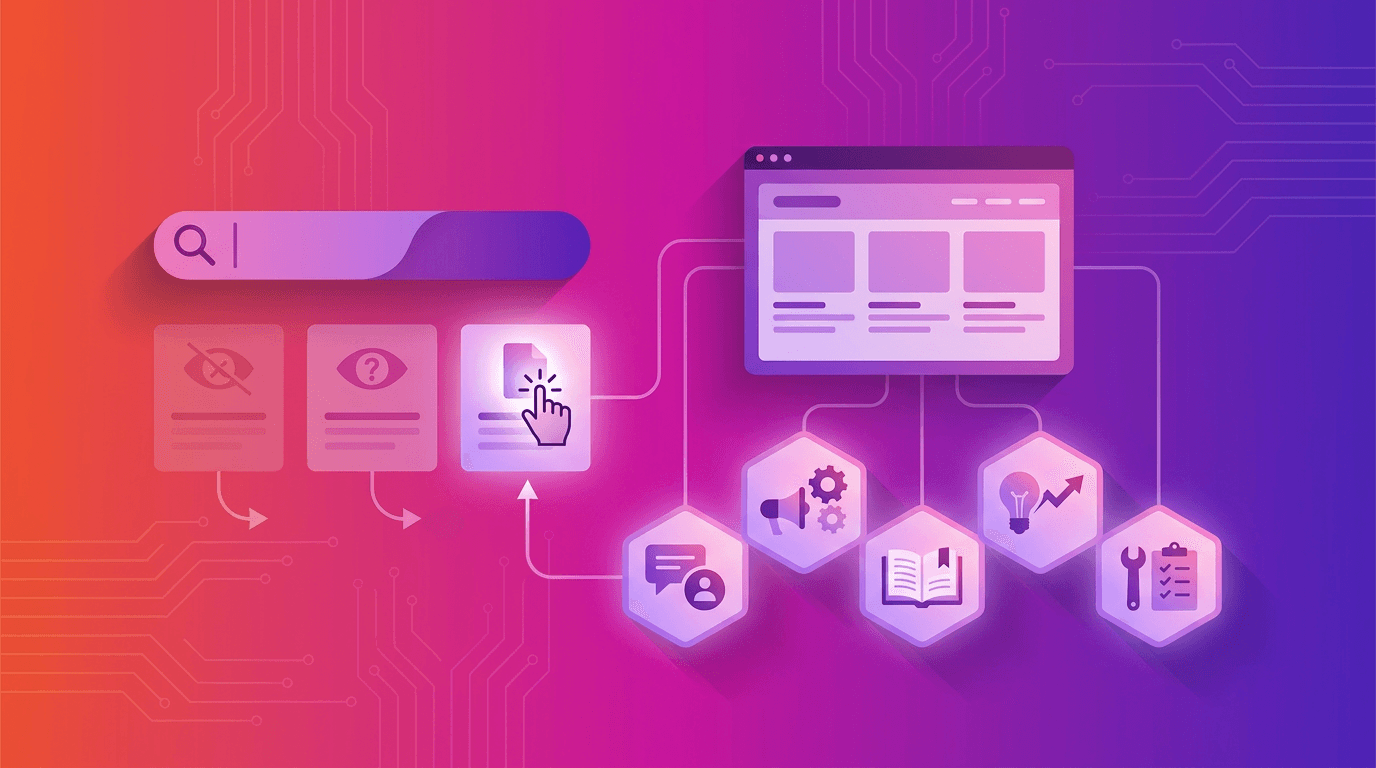
In the first four months of this year, 68 percent of Google searches in the US ended without the user clicking through to any website. There are no comparable figures for Norway. Google AI Mode launched here last October all the same, and we often see the same pattern in Norwegian companies' Search Console data: impressions go up while clicks go down. Which leaves a question most marketing teams have been putting off. If search no longer sends people to your website, what is the website supposed to do?
The numbers: zero-click searches in 2026
On 9 June, Rand Fishkin at SparkToro published an analysis of Similarweb clickstream data covering mobile and desktop from January to April 2026. Of all Google searches in the US, 68.01 percent ended without a click. In 2024 the figure was 60.45 percent, an increase of just over seven and a half percentage points in two years.
A zero-click search means the user got the answer on the results page, searched again or gave up. Clicks on ads and on Google's own properties count as clicks, so the share that lands on an ordinary website like yours is lower than the 32 percent left over.
A week later SparkToro published a comparison between countries for the same period. Share of searches ending without a click:
- United Kingdom: 69.5%
- United States: 68.0%
- France: 65.3%
- Canada: 63.8%
- Italy: 63.4%
- Germany: 62.1%
Norway is not included, and I have not found a Norwegian study using the same method. All six countries sit above 60 percent, with seven and a half points between the highest and the lowest. I see no reason why Norway would fall far outside that range, but it is an assumption I cannot back up with data.
What AI summaries do to click-through rates
The biggest single factor is AI Overviews, the summaries Google places at the top of the results page. According to SparkToro they now appear on more than 20 percent of searches, and when they do, click-through rates drop by almost 60 percent.
Pew Research Center reached a similar conclusion with a different method. They tracked 68,879 searches by 900 US adults in March 2025:
- When an AI summary appeared, users clicked a traditional search result in 8 percent of visits.
- Without a summary, the figure was 15 percent.
- Links inside the summary itself were clicked in 1 percent of visits.
- 26 percent ended their browsing session after a results page with a summary, compared with 16 percent without one.
AI Mode, the conversational search experience, still has limited use in the US. SparkToro found that 0.34 percent of searches went there during the period measured. In Norway, Google AI Mode launched on 10 October 2025 as a separate tab in search, at google.com/ai and in the Google app. How many Norwegians use it is not known.
[QA: add anonymised Search Console figures (impressions vs. clicks before/after Oct. 2025) from our own clients]
When organic traffic declines: what the website is for now
When organic traffic declines while impressions hold steady, it is tempting to conclude the website has lost its value. I think that reading is wrong. The website has taken on two other jobs, and both matter more than collecting visits.
The first is being the place where the decision gets made. Someone who clicks through today has often read a summary on Google or in ChatGPT first. They roughly know what you do and come to check prices, references, delivery times or who to call. You get fewer visits, but the people who arrive are further along in the buying process. A page written to catch the attention of the curious works poorly for someone who is about to decide.
The second job is being the source the language models take their facts from. When Google, ChatGPT or Copilot describe your business, they use whatever they can find. If your own website does not state clearly what you offer, where you are and what things cost, the model picks it up from directory listings, old press coverage or a competitor who has written about the same topic. Then you lose both the click and control over what gets said about you.
For a leadership team, this means traffic has become a poor primary metric. Organic visits can fall while the number of enquiries holds steady or grows. If you only report clicks, you risk cutting content that is doing its job.
Six changes to make
- Measure impressions and conversions alongside clicks. Google states that appearances in AI Overviews and AI Mode are included in Search Console under the "Web" search type. Track impressions, average position and conversions from organic search over time, and put them next to the number of leads in your CRM. That tells you whether the drop in clicks is costing you anything.
- Build clear answer pages. Write pages that answer one specific question customers ask: what does it cost, how long does it take, who is it for, how are you different from the alternative. Put the answer in the first paragraph and the detail below. A page like that works for the person arriving from a summary, and it gives the models a precise sentence to pick up.
- Use structured data where it makes sense. Google says there is no special markup needed to appear in its AI features and that standard SEO is enough. Schema.org structured data (Organization, LocalBusiness, Product, Article) is still the simplest way to give machines unambiguous facts such as name, address, price and opening hours. The format is shared by the major search engines, so the work pays off in more than one place.
- Build branded search. When general questions are answered on the results page, searches for your name are among those that still get clicks. Branded search is mostly built outside the search engine: articles, talks, coverage in trade media, LinkedIn. Track branded search in Search Console as a separate number.
- Own more of your channels. A newsletter with relevant subscribers is a channel Google cannot turn down with a new results page. The same goes for a CRM that tells you who downloaded what. The less you depend on organic traffic to reach people, the less the next change in search will hurt.
- Work on GEO. We have written about GEO before, so I will stick to the practical part: ask ChatGPT, Gemini, Copilot and Google AI Mode about your company and about the category you compete in, note what they say, and repeat it every month. If you fix errors on your own site and in sources you control, you can see whether the answers change.
What to do this month
Export impressions and clicks from Search Console for the period before and after 10 October 2025, and compare them with the number of enquiries over the same period. Find the ten pages with the most impressions and the lowest click-through rate, and check whether the answer users are looking for sits at the top. Add branded searches as a separate line, so you can see whether they move differently from generic searches. It takes a couple of hours and gives you a better picture than the traffic graph in Google Analytics.
I work on website architecture and technical setup at Frontkom, including structured data and measurement setups that separate impressions, clicks and conversions.
Sources
- In 2026, less than one-third of Google searches still send a click, SparkToro, 9 June 2026
- Zero-click searches highest in the UK, lowest in Germany, and France has the most efficient searchers, SparkToro, 16 June 2026
- Google users are less likely to click on links when an AI summary appears in the results, Pew Research Center, 22 July 2025
- Googles «AI-modus» endelig lansert i Norge, Digital Norway, 10 October 2025
- AI features and your website, Google Search Central
Transparency note: This article is based on the author's own analysis and experience. AI has been used as an editorial aid for language and structure.