
Kunde
Distriktssenteret, the Centre of Competence on Rural Development
Bransje
Government centre of competence for local community development
Oppdrag
Insight, information architecture, design, development, content migration, AI assistants, operations and maintenance
Teknologi
Nettside
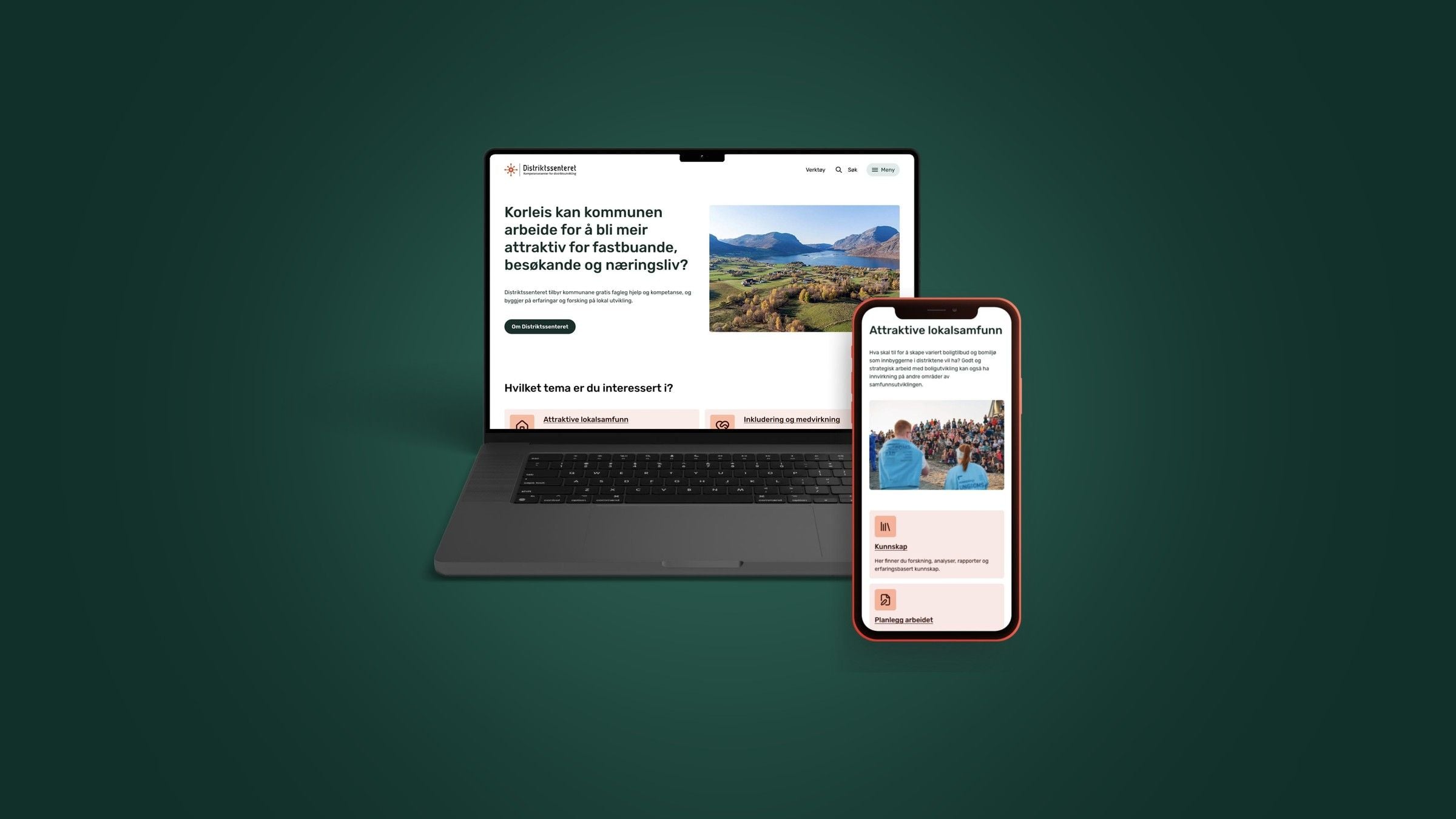
distriktssenteret.noDistriktssenteret is a national centre of competence that works to strengthen municipalities and local shops in developing attractive and thriving local communities. They have a public mission that prioritises rural Norway, and they help make it possible for people to live good lives in small local communities.
Communicating and sharing knowledge is an important part of this mission, and when they set out to renew their websites, they chose Frontkom, with Sanity as the CMS.
Impact and customer value
The move from old to new has given Distriktssenteret more independence and flexibility. They now have full control when they create new pages themselves. The editorial team assembles landing pages from ready-made building blocks in Sanity, moves content elements around and shares previews with external contributors before publishing.
We create landing pages and other content elements ourselves, without having to ask the supplier for help. We have become fairly self-sufficient and will eventually only need help with larger development work and design changes.
At the same time, they have less to maintain. Three websites have become two, and low-traffic content was cleared out before the migration.
Knowledge for rural municipalities
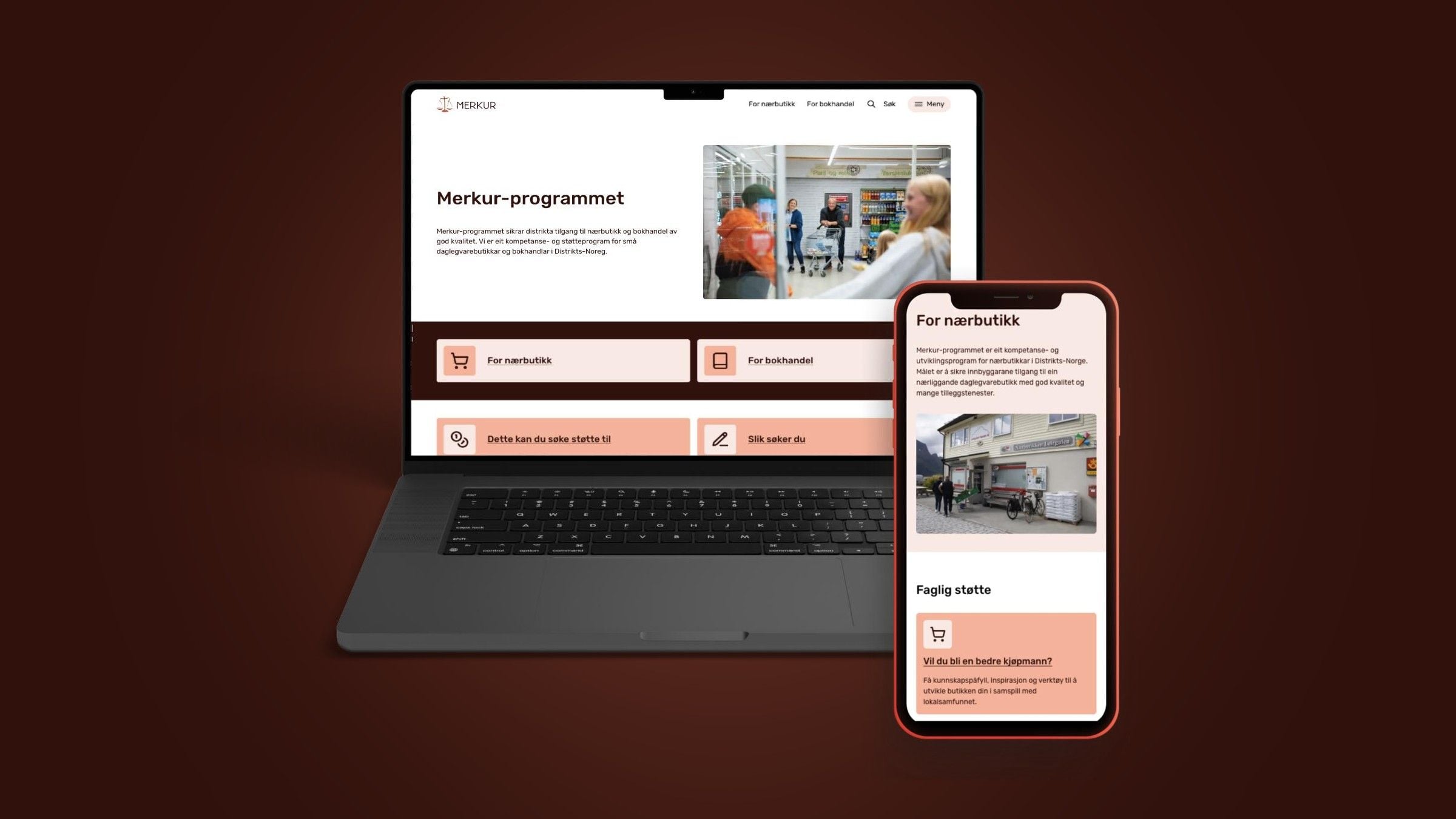
Distriktssenteret is a government centre of competence for local community development. Its audience ranges from mayors and municipal planners to local grocery stores in the Merkur programme, which provides support and expertise to shops in rural areas.
Three websites and a lot of old content
In autumn 2025, Distriktssenteret had three websites: distriktssenteret.no, merkur-programmet.no and enkelplanlegging.no. Distriktssenteret.no alone had around 2,500 files, and more than 95 per cent of them were PDFs. Most of them sat in a project database that almost nobody visited.
Distriktssenteret put the development and operation of new websites out to tender. They wanted an agile process where the supplier could help shape the choices along the way. Frontkom won the tender and started work in November 2025.
Insight before design
Frontkom began by analysing how the websites were used. The data showed that users arrive with specific tasks. They search for methods and tools such as plan reviews (planvask), SWOT analysis and the Steigen model, while only around 15 per cent click through from the subject area pages.
Together with Distriktssenteret, we prioritised business goals, target groups and user tasks. We then held workshops using the Core Model for the most important pages, and the structure was built around tools and tasks.
We had a good process with Frontkom all the way to the finished design and end result. The core models we worked out were very useful, and we can now see how the process led to finished pages.
Clearing out before moving
The insight gave Distriktssenteret a basis for clearing out. It was decided that the project database, with around 370 pages and associated PDFs, would not be carried over. Enkel planlegging, which users were very happy with, was moved into distriktssenteret.no. The Merkur programme keeps its own website because the brand is strong, but better links have been added between the two.
“A lot is new to us, and we have focused on moving content to a new platform while clearing out everything we had. It has been a good process, and it was smart of us to clear out as thoroughly as we did,” says Aggvin.
Fixed frameworks and building blocks that fit together
Both websites are built on Sanity, with a Next.js front end on Vercel. Distriktssenteret asked for fixed frameworks and good templates, so Frontkom designed a set of building blocks that fit together. The editorial team assembles pages from these blocks and moves them around until the page looks right.
“We wanted a tight framework, good templates and the ability to build with blocks. The building blocks we have designed fit well together, and it is now easier to move content elements around than before. It gives us greater flexibility and feels like a big gain,” says Aggvin.
When the editorial team needs a new design element, we build it. Tables were missing at launch, and that block was added in autumn 2026.
Design changes without a developer
Because the pages are built from blocks, the editorial team can rebuild a page and try out new formats without ordering development work.
“We can make ongoing design changes and rebuild the pages ourselves in Sanity. It lets us test different formats for shorter or longer periods, and the tool is easy to use,” says Aggvin.
Better reviews with previews
Editors can share a preview link to a page with others, including external contributors, without them needing to log in.
We used to share Word documents and PDFs. Now the contributors can see how the content will look, and we get a much better review process.
AI that finds its way through the content
Both websites have an AI assistant from Frontkom's AI platform that answers based on the content of the pages. On distriktssenteret.no, the AI search is part of the front page. On merkur-programmet.no, shop owners can ask the Merkur assistant about support schemes and find the right consultant. The assistants answer in Bokmål, Nynorsk and English, and they warn users not to enter personal data.
We collect statistics with Plausible, which does not use cookies. As a result, the websites do not need a consent banner.
What did we deliver?
- Analysis of how the three websites were used, with a dashboard in Looker Studio
- Prioritisation of business goals, target groups and user tasks
- Workshops using the Core Model
- New information architecture and sitemap
- Visual design and building blocks for Sanity
- Two websites on Sanity, Next.js and Vercel, in Bokmål and Nynorsk
- Redirects from old URLs
- In-house training for editors
- AI search on distriktssenteret.no and the Merkur assistant on merkur-programmet.no
- Statistics with Plausible, without a consent banner
- Operations, maintenance, SLA and data processing agreement
From project to maintenance
Since August 2026, Frontkom has operated and maintained the websites under a partnership agreement with a fixed monthly price. The agreement covers hosting, Sanity licences, the AI platform, daily backups, security updates and bug fixes. Distriktssenteret orders larger changes when they need them.
“We are very pleased with the collaboration with Frontkom and with Sanity as our CMS,” says Aggvin.
Distriktssenteret knew what they wanted: fixed frameworks and freedom within them. With Sanity, we could design the building blocks together with the editorial team, and now they use them without asking us for help.

Do you have a project in mind?
Whether you have a concrete plan or just an idea, we'd love to hear from you. Get in touch and we'll find the way forward together.
Get in touch