Photo: MER Marketing
On 17 November I gave a talk for the B2B Executive Sales Network at Epicenter in Oslo, where Frontkom has an office. Using an example of a sales process, from cold prospect to signed contract, I showed how I worked with AI at each step. Here are the main points from the talk, and three things you can start on tomorrow.
I'm a seller. I'm also a buyer
When we bought a house, I had an agent read the insurance terms against the house and our needs. I chose a company that cost a little more, because the terms were better.
The seller at the competitor offered to match the price. I asked him to match the content.
The comparison was done before I spoke to any of the sellers. The same thing is happening in B2B sales. Gartner surveyed almost 650 B2B buyers in the autumn of 2025, and 67 per cent said they would rather buy without a sales rep. The year before, the share was 61 per cent. The customer has done the research before you arrive. The question is whether you have done more.
An example in six steps
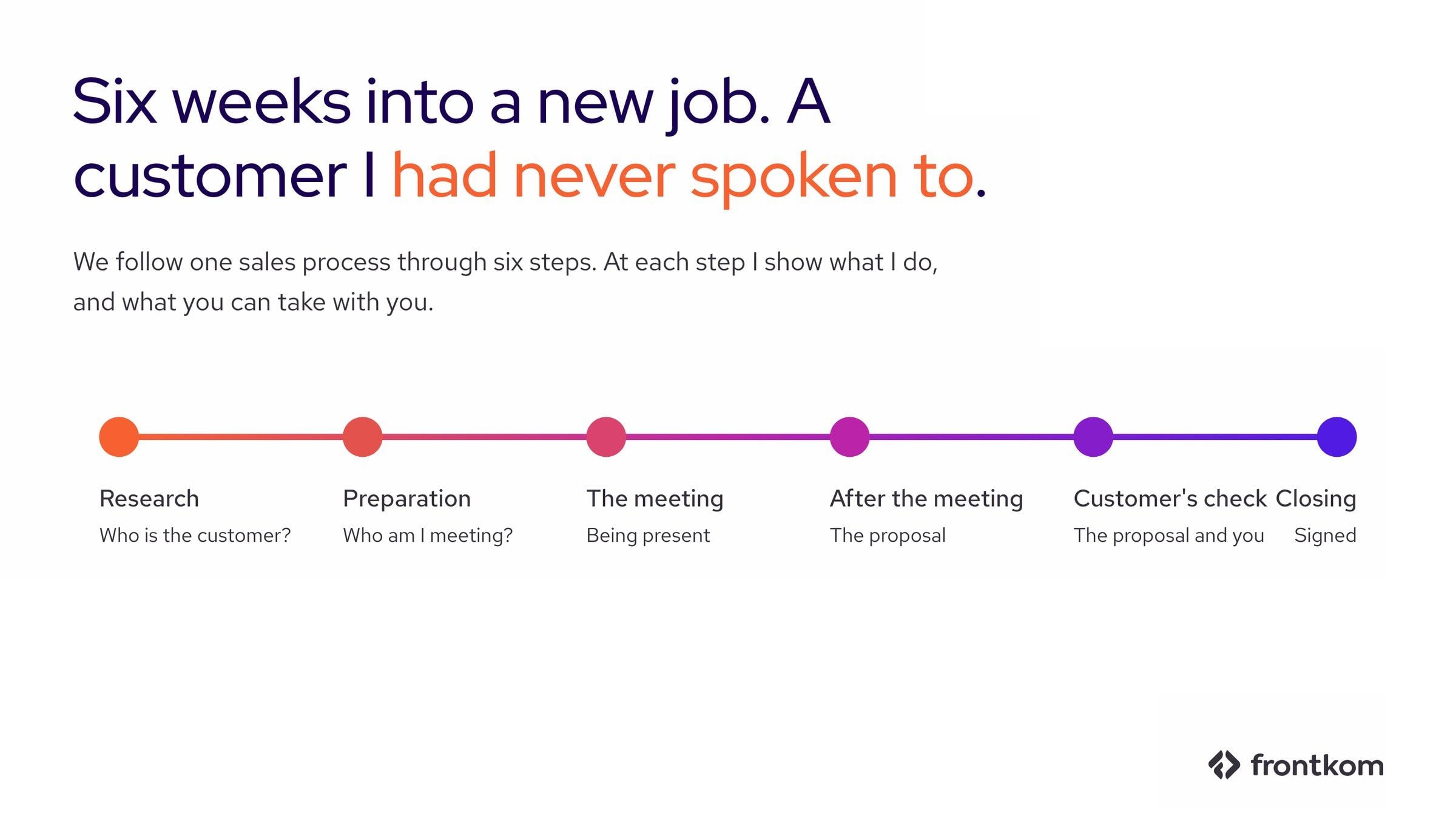
The example starts with me six weeks into a new job, about to meet a customer I have never spoken to. In the talk we followed the process through six steps: research, preparation, the meeting, after the meeting, the customer's check and closing.
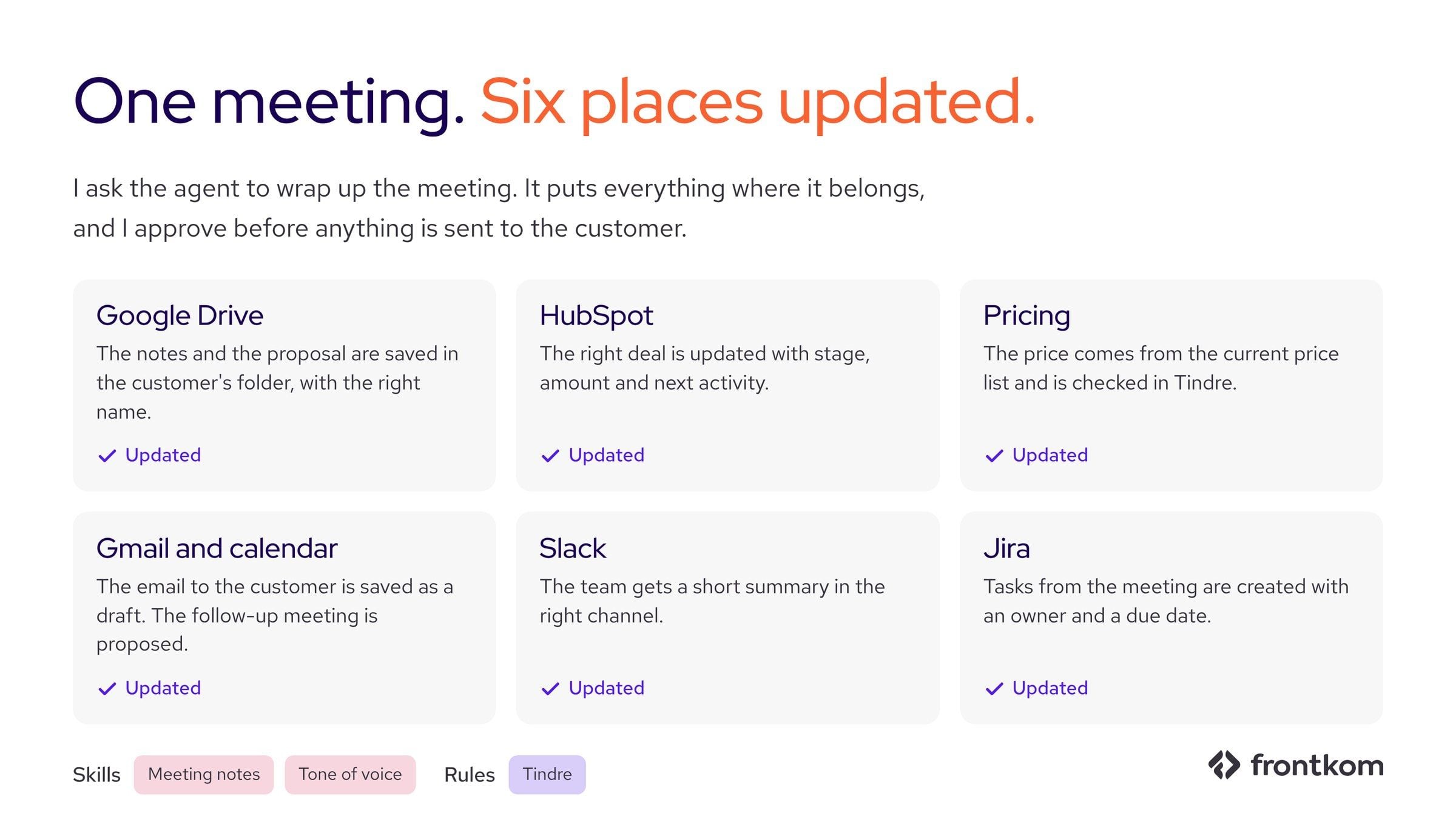
The agent I use is connected to the systems we work in: HubSpot, Google Drive, Gmail and calendar, Slack, Jira and Confluence, Moment for time tracking and invoicing, Tripletex for accounting, meeting recordings and web search. It reads and updates with my permissions.
The rules it checks against live in Tindre. Tindre is a platform that brings together an organisation's knowledge, rules, roles and access, and makes them available to the AI tools and agents it uses, whichever language model sits underneath. We use it ourselves, and we set it up for customers.
In Tindre, the rules are called standards. The people who decide how we work write them down once: our prices, our templates, what we deliver and how we speak. Each standard has an owner, a version and controlled access, so it is clear what applies now. That is why what the agent answers and produces can be checked: it rests on something approved, up to date and traceable.
Research that took days now takes minutes
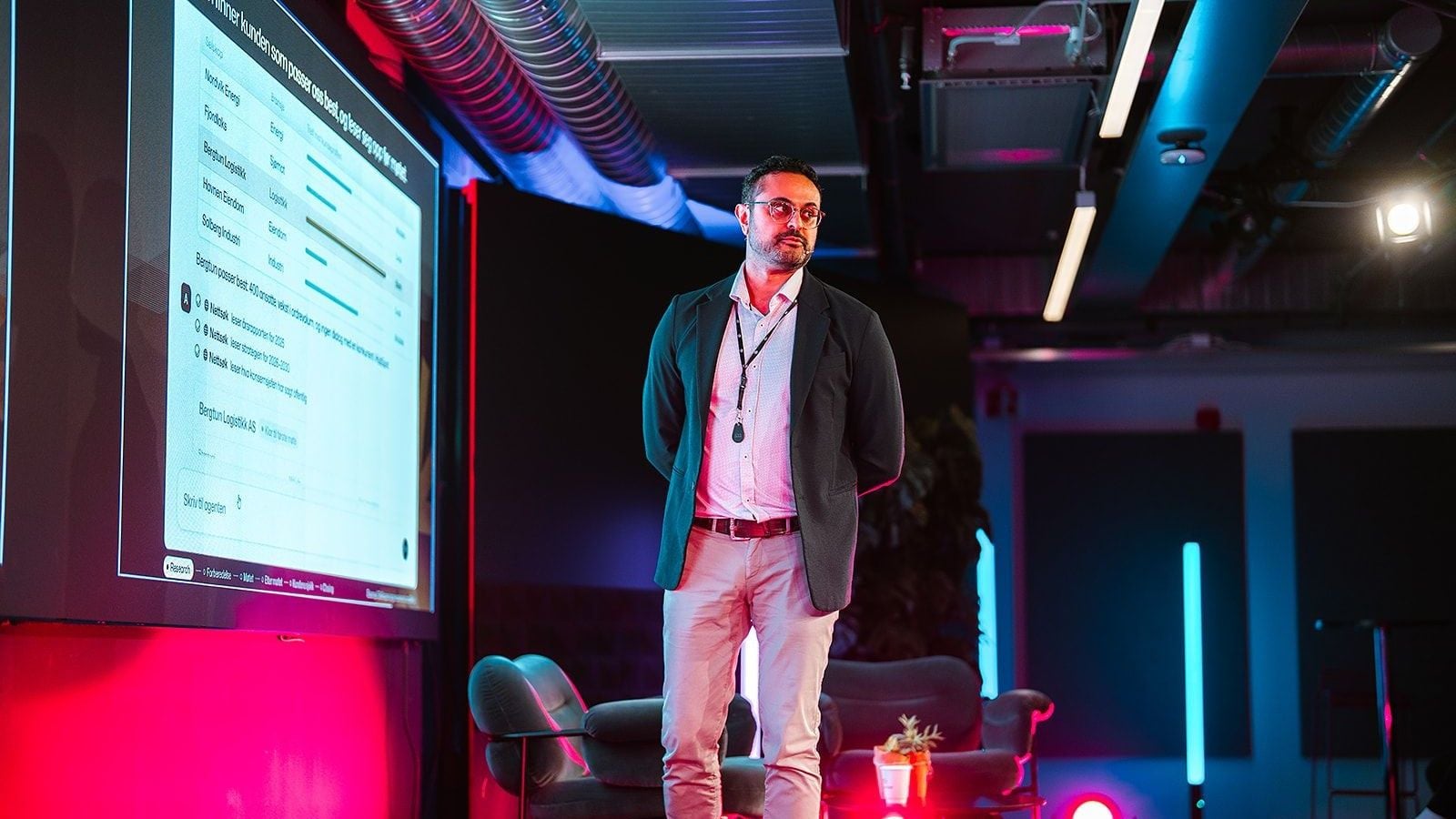
The agent compares a list of companies against our customer profile and picks the best fit. Then it reads the annual report, the strategy and what the decision-maker has said in public. The result is one card with the customer's strategy, goals and who decides.
The idea is simple: walk in with the customer's own goals in mind.
Same meeting, three presentations
If the CEO, the CFO and the CTO are at the table, each of them has a different question:
- CEO: What does this mean for our goals?
- CFO: What does it cost, and what do we save?
- CTO: Does it fit our technology, and is it secure?
Bring the same presentation to all three, and you miss two of them. The agent adapts the presentation to the role I am meeting. Before I leave, it is checked against our standards: the right logo, the right colours and only claims we can stand behind.
In the meeting, you can be present
With the groundwork done, I can spend the meeting listening. When the customer has agreed, the meeting is transcribed, so I don't need to take notes. The customer gets to try a simple prototype instead of reading a brochure.
I think this is where the seller will matter most. In the same Gartner survey, 69 per cent of the buyers said they want to check what AI has told them with a sales rep. Customers arrive with answers from a language model and want to know whether they hold up.
Three questions before the proposal is written
After the meeting I ask the transcript three questions:
- What did the customer say without saying it? What came up in passing, or what nobody wanted to answer.
- What is the common thread? The topic the customer kept coming back to throughout the meeting.
- What matters in the short and the long term? What has to be solved now, and where the customer wants to be in a few years.
The answers become the basis for the proposal, and the first draft takes minutes.
The proposal is checked before it goes out
A quick draft is not the same as a good proposal. When you want to win the deal, it is easy to promise a little too much, and it is usually the newest people on the team who do. In the demo the agent wrote a draft proposal after the meeting, and the standards in Tindre stopped three sentences before the draft went any further.
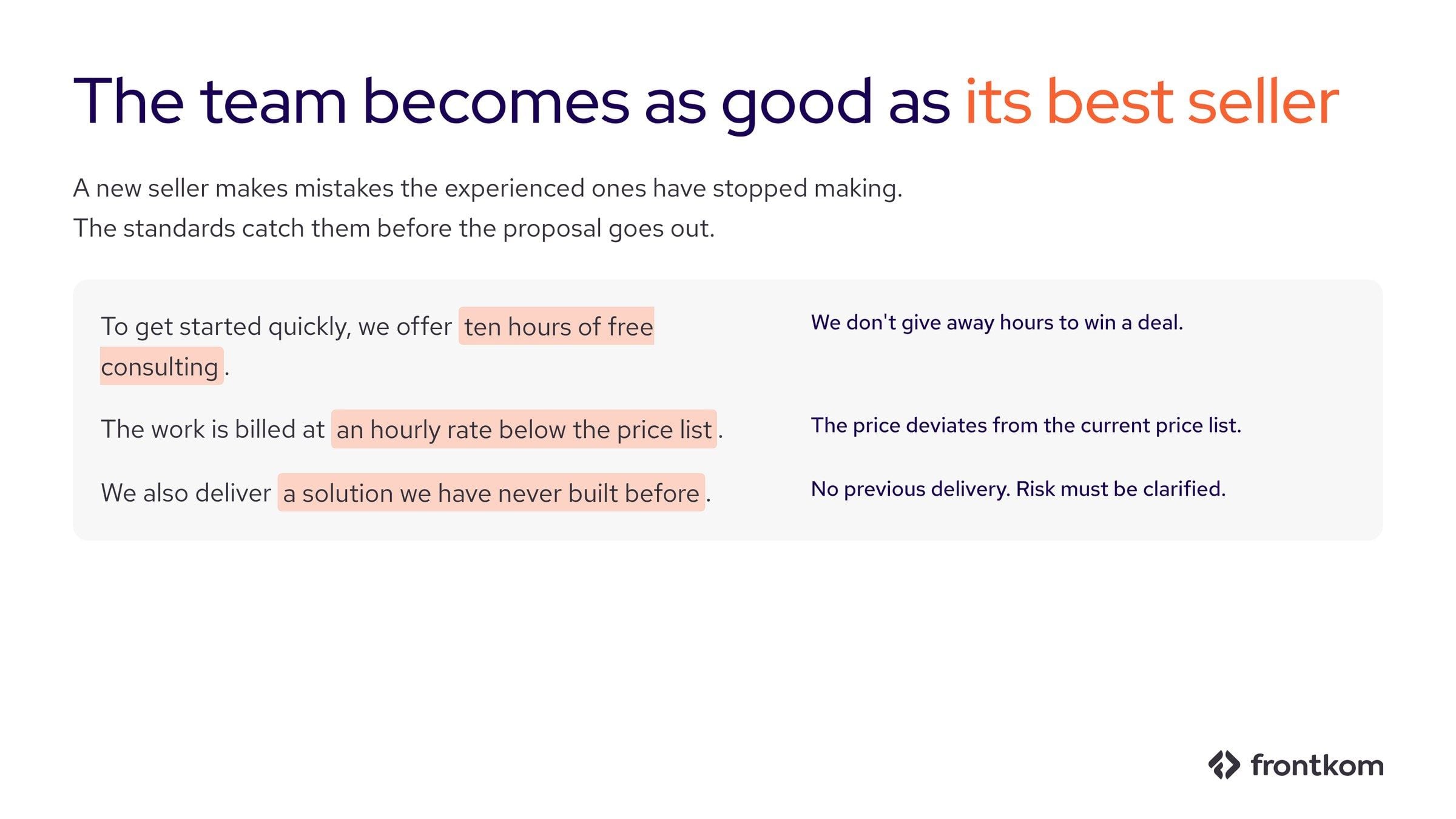
Once the rules are written down, a new seller can deliver like an experienced one from the first week.
Finally, I ask the agent to wrap up the meeting. It updates the systems we already use, so nobody has to type the same thing in several places. I approve before anything is sent to the customer.
The customer checks you too
The customer's agent does the same work from the other side of the table. It reads the proposal and the contract and looks for contradictions. Then it asks who the seller is.
I tried it on myself on 11 November, with one quick search. The agent found nothing on frontkom.com, even though the news story about my joining had been published two days earlier. With a few more rounds it might have found it. Here is what else it found:
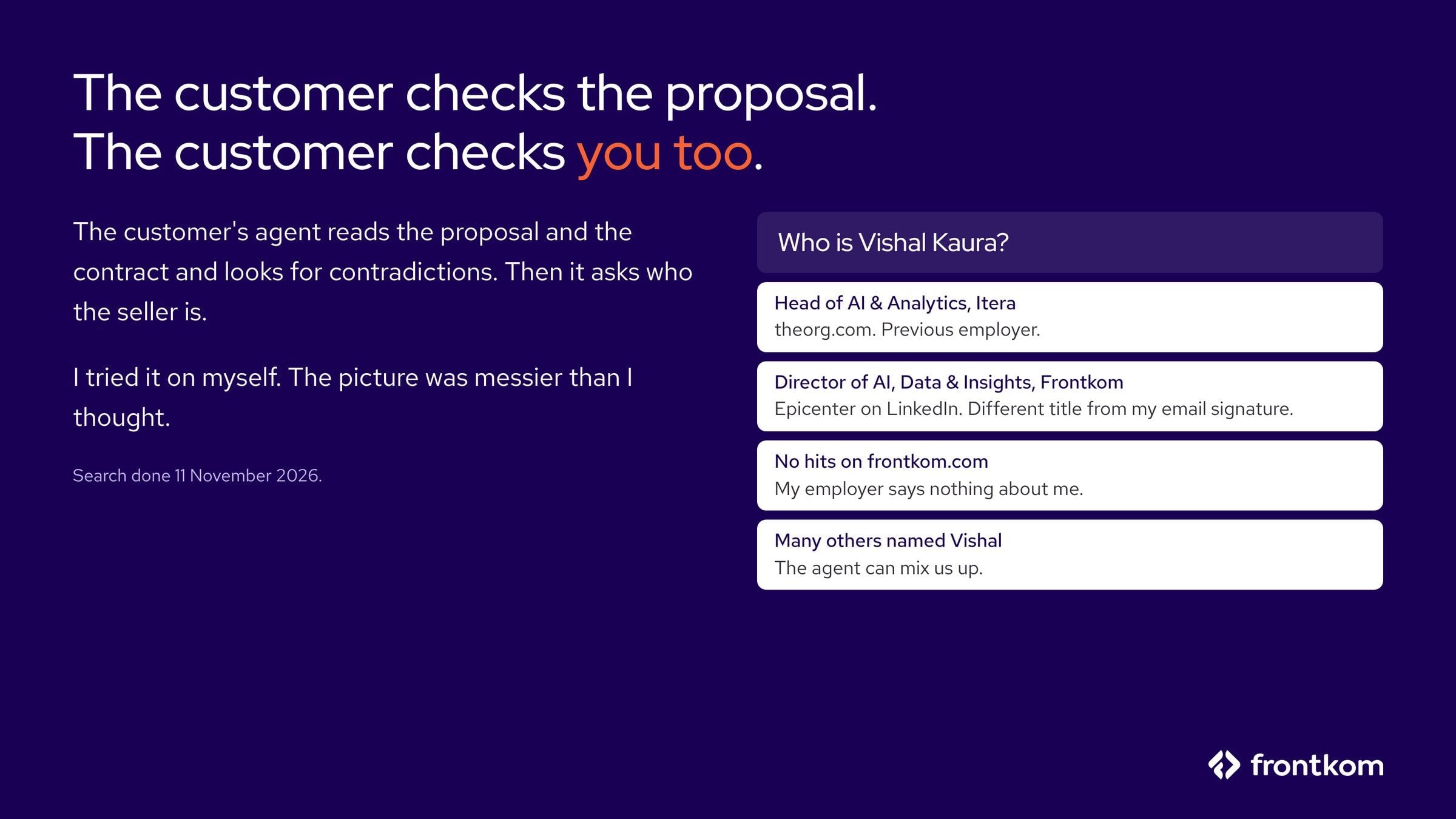
What the customer's agent finds about you and your company becomes part of how the proposal is judged. It is worth knowing what that is before the customer sees it.
The lesson becomes a rule
When the deal is signed, we write down what we learned. The lesson becomes a rule, and the rule applies to every seller in every deal after that.
The agent makes you fast. The rules make the whole team better.
Three things you can do tomorrow
- Before the meeting: Use AI for research before every first meeting, and adapt the presentation to the role you are meeting.
- In your organisation: Write down your rules: prices, what you deliver and how you speak. Then the agents can use them.
- Out with the buyer: Make sure that what is said about you, where the buyer's agent looks, is correct and clear.
Want to see the demos from the talk, or talk about what this could look like in your sales team? Get in touch at vishal@frontkom.com.
Transparency note: This article is based on a talk the author gave for the B2B Executive Sales Network on 17 November 2026. AI has been used as an editorial tool for structure and language. The author has reviewed the content and is responsible for it.