
From left: Monica Storflor Bjøringsøy, Site Manager Trondheim and Practice Lead, Scale & Impact, and Sverre Øie Moe, AI Transformation Lead.
The short answer is no. Most of the organisations we work with have core systems that have been running for years. That is where the customers, orders, prices and cases live, along with the rules and exceptions that have built up over time and often aren't written down anywhere else.
That is exactly what AI needs to do something useful. When we put AI on top of your systems instead of replacing them, you can start straight away, without waiting two or three years for a new system before you see any gains.
Sound familiar?
Many start with the tool rather than the problem. Everyone gets a Copilot or ChatGPT licence, maybe a training session, and then you wait for something to happen. Something does: people write emails faster and get their meetings summarised. But ask the leadership team six months later what it has done for the bottom line, and the answer is often hard to give.
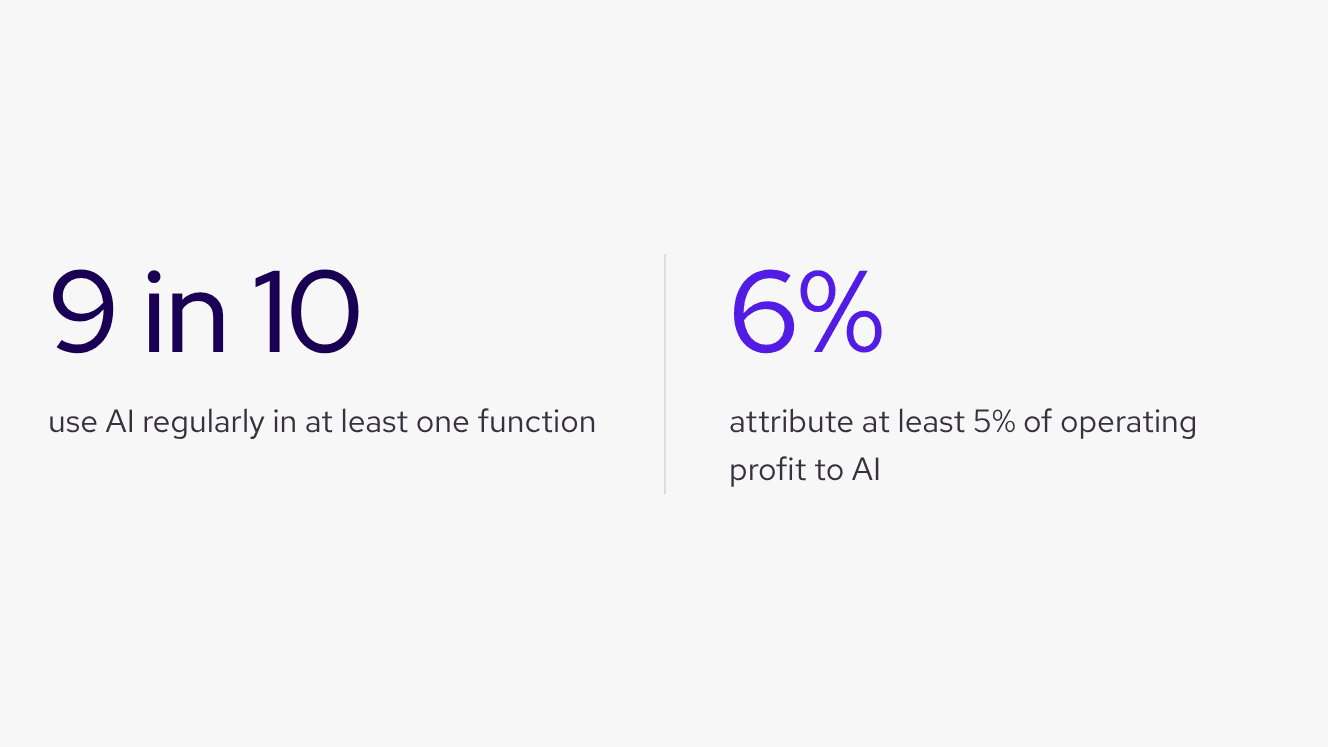
In McKinsey's survey this year, nearly nine in ten organisations say they use AI regularly in at least one function. Only around six percent can attribute at least five percent of their operating profit (EBIT) to AI, the same share as the year before.
I think much of the explanation is that nobody has pinned down which problem AI should solve: which workflow takes too long, who owns it and what it costs today. That ties in with another mistake, which is not measuring the starting point. If you don't know how long a proposal takes today, or how many enquiries customer service gets in a week, you can't show that anything has improved. AI then becomes a cost line in the budget, licences and tokens, rather than something you can see the effect of.
The third variant is that every department does its own thing. Marketing has its chatbot, customer service has theirs and sales has theirs, each with its own knowledge base and instructions. When a rule changes, nobody quite knows where it needs updating, and you have built new silos with AI.
Fredrik Paus has written more about why most companies stop at the chat window.
The first thing you discover
When AI goes on top of your systems, the first thing you discover is how much value is already there. The next is less pleasant: the weaknesses in your data surface quickly. The customer register in one system may not match the one in another, and prices may live in three different places. People have often known about this for years and lived with it, because staff have worked around it by hand. An AI agent doesn't work around anything. It uses what is there.
So the first job is often a clean-up. Clean the data your first workflow needs, and leave the rest for later.
How we go about it
The systems stay. What changes are the screens people work in and how much manual work disappears. We choose one workflow with volume, a clear owner and a target we can measure against, and take it in four steps:
- AI suggests. People still do the work and assess the suggestions.
- AI flags exceptions. Once the suggestions hold up, it starts pointing out what stands out.
- AI decides, a person approves. Nothing happens until someone says yes.
- AI does the work itself. That step comes last.
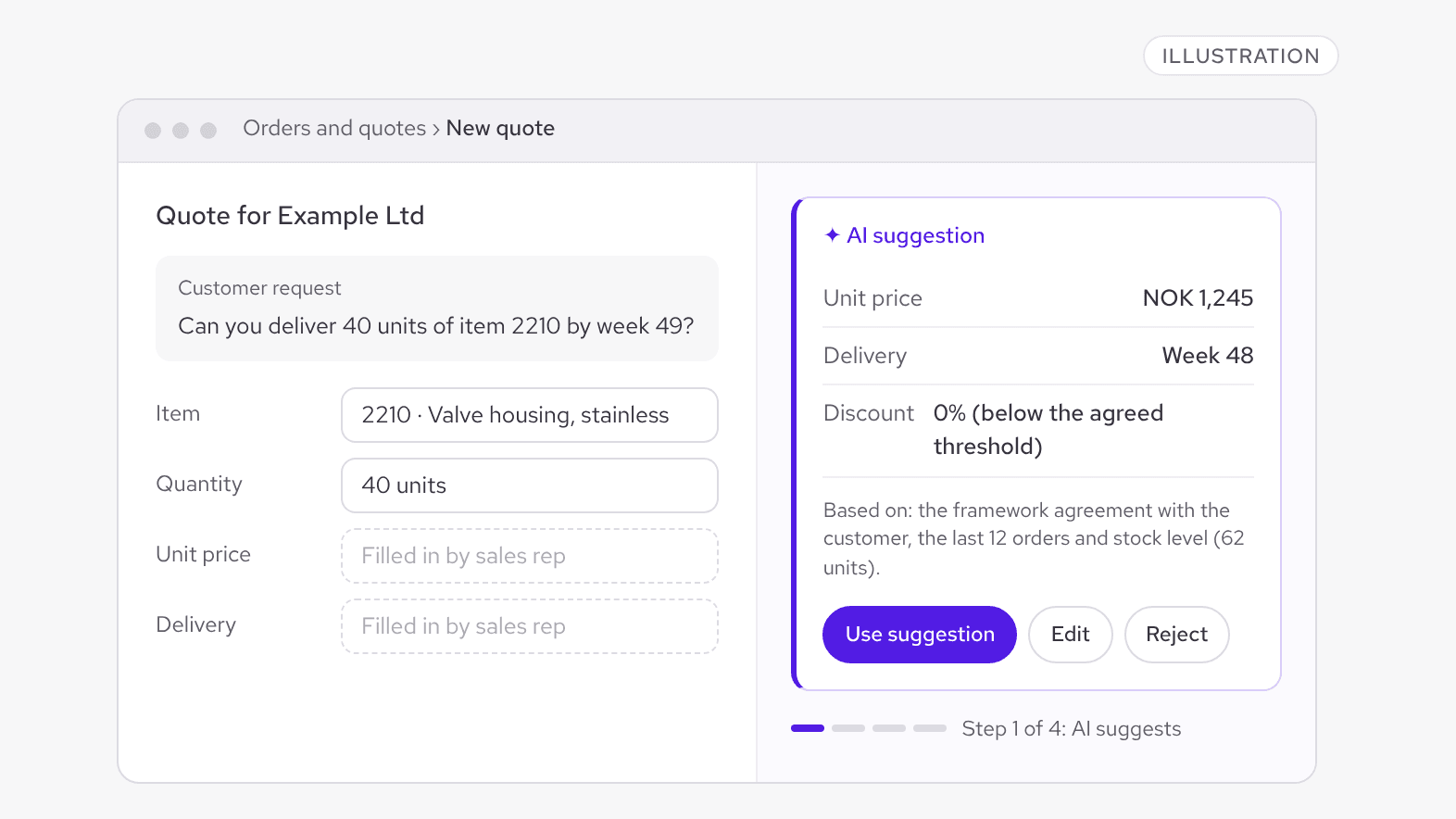
We take one step at a time and only move on once we have measured that the previous one works.
What many in the industry would disagree with
Many in our industry call old core systems technical debt, something to modernise or replace before you can get started. That is partly true. Still, I believe these systems are the biggest advantage an established organisation has when it starts using AI. A system holding perhaps twenty years of customers, cases, prices and decisions is a memory your competitors don't have.
Anyone can buy the language models. Nobody can buy twenty years of customers, prices and decisions.
That is what can make AI work better for you than for anyone else.
I also think the consulting industry has a vested interest here. Replacing a system is a big project that takes years and needs a lot of people, and it is a good project to sell. So it is no surprise that the recommendation is often to replace. For the client, that means two or three years without value from AI, while others in the market put what they already have to work.
Sometimes a system does need replacing, because it no longer works. Then it should be a decision in its own right, made for its own reasons, and not because you believe it is a prerequisite for AI. You can nearly always start with what you have. The first workflows tell you more about what might need replacing than a large preliminary study will.
Want to know where to start?
I'm happy to talk about which workflow could be a good first step for you. Email me at sverre.moe@frontkom.com, or read more about how we work with AI.
Transparency note: This article is based on the author's own experience and judgement. AI was used as an editorial aid for structure and language. The author has reviewed the content and is responsible for it.